Add your promotional text...

Chasing Stars: The Best Places to Stargaze in Washington State
Discover the best places to go stargazing in Washington State, from remote mountain viewpoints to peaceful dark-sky destinations. Learn what to expect, the best times to visit, and what I personally pack to stay warm, comfortable, and prepared for unforgettable nights under the stars. Perfect for families, couples, photographers, and outdoor adventurers chasing the Milky Way in the Pacific Northwest.
WASHINGTON TRAVEL
Get Outside and Play USA
9/4/20258 min read
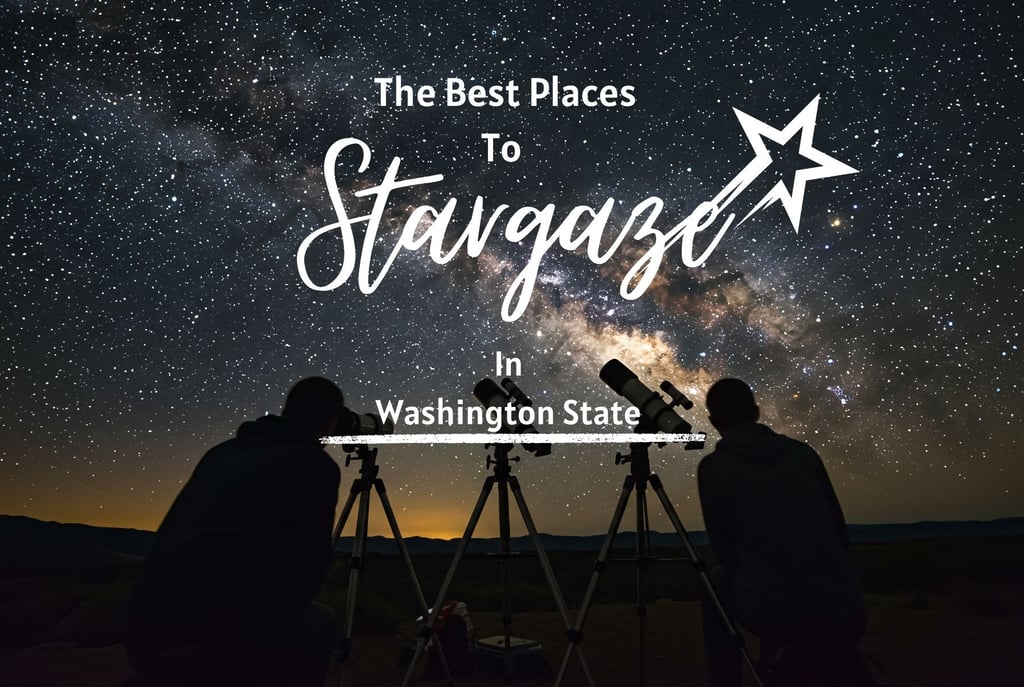
There’s something about standing under a star-filled sky that makes the world feel both endless and close all at once. Washington’s mix of wild coastlines, mountain peaks, and wide-open desert means there’s a perfect stargazing spot for everyone — whether you want to peer through a giant telescope or simply lay back on a blanket and count shooting stars. So grab a thermos of something warm, pack a cozy hoodie, and let’s explore where the heavens shine brightest across the Evergreen State.
Goldendale Observatory State Park – Goldendale, WA
Perched high above the Columbia River Gorge, the Goldendale Observatory is Washington’s crown jewel of public astronomy. Here, you’ll find one of the largest publicly accessible telescopes in the United States, plus a passionate crew who love to share the wonders of the universe.
Pricing: Free admission. Discover Pass required ($10/day or $30 annual).
Directions: From Yakima: Take I‑82 East → US‑97 South ~63 miles into Goldendale → E Broadway → N Columbus Ave → right onto Observatory Drive.
Pro Tip: Arrive early, dress warmly, and bring curiosity. Once the program starts, no late arrivals allowed.
Palouse Falls State Park – Eastern Washington
Remote and wild, Palouse Falls transforms from roaring waterfall by day to cosmic cathedral by night. The Milky Way sweeps right across the canyon for a show you’ll never forget.
Pricing: Day‑use $10 per vehicle (Discover Pass honored).
Directions: From I‑90 exit 221 at Ritzville → WA‑261 South 41 miles → left on Palouse Falls Road ~2.4 miles to park.
Pro Tip: Bring supplies and gas up before arriving — services are limited.
Hurricane Ridge – Olympic National Park
High in the Olympic Mountains, Hurricane Ridge offers alpine‑level stargazing above the clouds. I always say, "This is as close to Heaven as anyone can get". This place is magical! Catch one of the National Park Service’s free telescope nights if you can.
Pricing: Park entrance fee $15–$30 per vehicle. Night‑sky events are free.
Directions: From Port Angeles: follow Hurricane Ridge Road 17 miles south. From Seattle: I‑5 → Hwy 101 across Hood Canal Bridge.
Pro Tip: Roads can close in winter — check conditions. Bundle up.
Artist Point – Mount Baker / North Cascades
Once summer snow melts, Artist Point becomes a mountaintop window to the galaxy. You’ll see Mount Shuksan glowing under starlight and meteors streaking through the alpine air.
Pricing: Free. Northwest Forest Pass required ($5 day / $30 annual).
Directions: From Bellingham: drive east on Hwy 542 (Mount Baker Highway) to the end of the road (open in summer).
Pro Tip: Pack layers and camera gear — this is photographer heaven.
Fish Trap Recreation Area – Near Spokane, WA
Just 30 miles southwest of Spokane, Fish Trap offers wide‑open, dark skies ideal for quiet stargazing. Perfect for those who prefer solitude over crowds.
Pricing: Free entry. Bring your own telescope or binoculars.
Directions: From Spokane: I‑90 West → Fishtrap Road exit → 1.5 miles south to BLM trailhead.
Pro Tip: Minimal facilities — pack your own water and red‑light flashlight.
The REACH Museum & Tri‑City Astronomy Club – Richland, WA
For easy access and expert guidance, join the Tri‑City Astronomy Club’s telescope nights at the REACH Museum. Perfect for families and first‑time star gazers.
Pricing: Star‑party events are free. Museum admission: $12 adults / $6 seniors & students.
Directions: 1943 Columbia Park Trail, Richland, WA 99352.
Pro Tip: Check event calendar before going — weather may change plans.
Pacific Northwest Regional Observatory (PNRO) – Horse Heaven Hills
Tucked between the Tri‑Cities and Walla Walla, PNRO sits beneath some of the darkest skies in Eastern Washington. Home to a research‑grade telescope used for public outreach.
Pricing: Free during outreach events (check ahead for availability).
Directions: Near Wallula in the Horse Heaven Hills, about a 40‑minute drive south of Richland.
Pro Tip: Bring GPS and flashlight — rural access and limited cell service.
Stargazing Tips for Your Next Night Out
• Check moon phases — new moons mean darker skies.
• Pack layers — even summer nights can get chilly.
• Bring binoculars or a small telescope.
• Use red-light flashlights to preserve night vision.
• Respect dark-sky rules — no bright lights or phones.
• Stay late; the Milky Way peaks around midnight.
My Favorite Mini Road‑Trip Route
Start in Richland at The REACH Museum for an easy urban star party, then head south to PNRO in the Horse Heaven Hills for a more advanced experience. Next, drive east to Palouse Falls for a camping night under desert stars. On your way back west, swing through Goldendale Observatory for a guided telescope show. It’s a weekend road trip through the galaxy — no spaceship required!
Final Thought
Washington’s night skies remind us that magic still exists — we just have to look up. Whether you’re camping beneath the Milky Way, snapping astrophotography on a chilly ridge, or watching Saturn’s rings through a telescope in Richland, every moment under the stars connects us to something greater. So next time the forecast says ‘clear skies,’ get outside and play.
This post may contain affiliate links, including links from Amazon, Walmart, and other affiliate partners. This means that if you click on a link and make a purchase, I may earn a small commission at no additional cost to you. As an Amazon Associate, I earn from qualifying purchases. I only recommend products I genuinely believe add value to outdoor adventures.
What I Actually Pack for Stargazing Trips in Washington State
One thing I’ve learned from chasing stars around Washington is that the right gear can completely change the experience. You don’t need expensive equipment or a complicated setup to enjoy the night sky—but having a few thoughtful things packed makes it easier to stay comfortable, relaxed, and out there long enough to really enjoy it.
Washington has some incredible dark-sky areas, but many of the best stargazing spots are remote, cold after sunset, and far away from city lights. That’s part of what makes them beautiful… but it also means preparation matters a lot more than people think.
When it comes to actually viewing the stars, I like bringing a beginner telescope, a compact travel telescope, or even just a good pair of astronomy binoculars because they help you see details you’d completely miss with the naked eye. And honestly, a star map app subscription has become one of my favorite things because I can never remember what constellation I’m actually looking at without help.
Lighting matters more than I expected too. Bright white lights destroy your night vision fast, which is why I always bring a red-light headlamp. It lets you move around without ruining your ability to see the stars. I also keep a rechargeable flashlight and a lantern with dim mode nearby because eventually you’ll need light for something—usually while trying not to trip over camp chairs in the dark.
And if you’re planning to stay out for hours like I usually do, comfort becomes really important. I always bring camp chairs, packable blankets, and sometimes even a cool-weather sleeping bag because Washington nights get cold fast once the sun goes down. A few hand warmers can also completely save the night once your fingers stop cooperating.
I also love trying to photograph the night sky whenever I can. A solid tripod makes a huge difference for night photography, and a smartphone tripod adapter is perfect if you’re using your phone instead of a camera. I also like using a remote shutter release because even pressing the camera button can shake the shot during long exposures. And honestly, even beginner-friendly DSLR or mirrorless cameras can capture some really beautiful star photos once you start experimenting.
Warm drinks and snacks have also become part of the experience for me. There’s something incredibly peaceful about sitting under a sky full of stars with hot chocolate or coffee in your hands. I usually bring an insulated thermos, a small portable camp stove, and a few easy snacks because once you’re far away from town, you’ll be glad you packed them.
Safety gear is another thing I never skip. A lot of Washington’s best stargazing spots are in remote areas with little to no cell service. I always like having an offline GPS or hiking app, a compass, a good first aid kit, and an emergency bivy or space blanket packed just in case. Hopefully, you never need most of it—but having it lets you relax more once you’re out there.
Layering is another huge part of staying comfortable. I always bring a warm beanie, thermal base layers, a lightweight insulated jacket, and wind-blocking gloves because temperatures can drop quickly, especially in mountain areas. Being warm enough to stay outside longer means you’re more likely to catch meteor showers, late-night skies, or those quiet moments when the Milky Way suddenly becomes visible overhead.
And honestly, some of the best stargazing nights are the ones shared with family—including dogs and kids. When I bring a dog along, I always pack an LED dog collar, a hands-free leash, a portable water bowl, and a warm dog blanket or jacket because chilly Washington nights affect them too. Plus, keeping dogs comfortable and visible makes the whole night less stressful.
And when kids come along, I try to make the whole night feel cozy and memorable instead of just educational. Things like kids binoculars, a beginner telescope, constellation cards, warm blankets, glow water bottles, and snacks help keep them engaged and excited. Because honestly, watching kids see a sky full of stars for the first time is pretty magical.
At the end of the day, stargazing isn’t really about having perfect gear. It’s about slowing down, looking up, and experiencing those quiet moments that remind you how big and beautiful the world really is. These are just the things I’ve learned help make those nights more comfortable, more memorable, and a little easier to enjoy.
Final Thought
There is something timeless about standing beneath a sky full of stars.
No matter where we come from or what season of life we are experiencing, the sight of thousands of stars scattered across the night sky has a way of capturing our attention. We stop what we are doing. We look up. And for a few moments, everything else seems to fade away.
Perhaps that is because the stars remind us that there is more to life than the worries we carry each day.
The challenges that feel overwhelming. The problems we cannot solve. The questions we wish we had answers to. Beneath an endless night sky, those things often seem a little smaller, while the world around us feels infinitely larger.
For generations, people have looked to the stars for inspiration. Travelers used them to navigate unfamiliar places. Dreamers gazed at them and imagined what might exist beyond the horizon. Families gathered beneath them to share stories, laughter, and memories.
In many ways, we still do the same today.
The stars remind us that life is filled with possibilities we cannot yet see.
Not every path is visible from where we stand.
Not every answer arrives when we want it to.
Yet the night sky encourages us to keep looking forward, even when the road ahead is unclear.
There is comfort in knowing that some lights continue shining even from great distances.
Perhaps people do the same.
Acts of kindness.
Words of encouragement.
Moments of love.
Long after they occur, they continue to brighten the lives of others in ways we may never fully realize.
As you sit beneath a canopy of stars, it becomes easier to remember that wonder still exists. There are mysteries left to explore, adventures still waiting to be taken, and dreams worth pursuing.
The night sky does not rush.
It does not demand.
It simply invites us to pause, breathe, and remember how extraordinary this world truly is.
Perhaps that's the real magic of the stars—not that they tell us where to go, but that they remind us to keep looking up, keep believing, and never lose sight of the possibilities that lie ahead.
Connect
Join our community
Contact
info@getoutsideandplayusa.com
© 2025. All rights reserved.