Add your promotional text...

Gold Panning for Beginners: What to Look For, What I Learned & Is It Worth It?
New to gold panning? Learn where gold hides, what to look for, and what to expect before you start. This real, no-fluff guide covers the hard work, common mistakes, and whether it’s actually worth it.
OUTDOOR LIFESTYLE & TRAVEL TIPS
Get Outside and Play USA
4/6/20264 min read
This post may contain affiliate links, including links from Amazon, Walmart, and other affiliate partners. This means that if you click on a link and make a purchase, I may earn a small commission at no additional cost to you. As an Amazon Associate, I earn from qualifying purchases. I only recommend products I genuinely believe add value to outdoor adventures and hiking experiences.
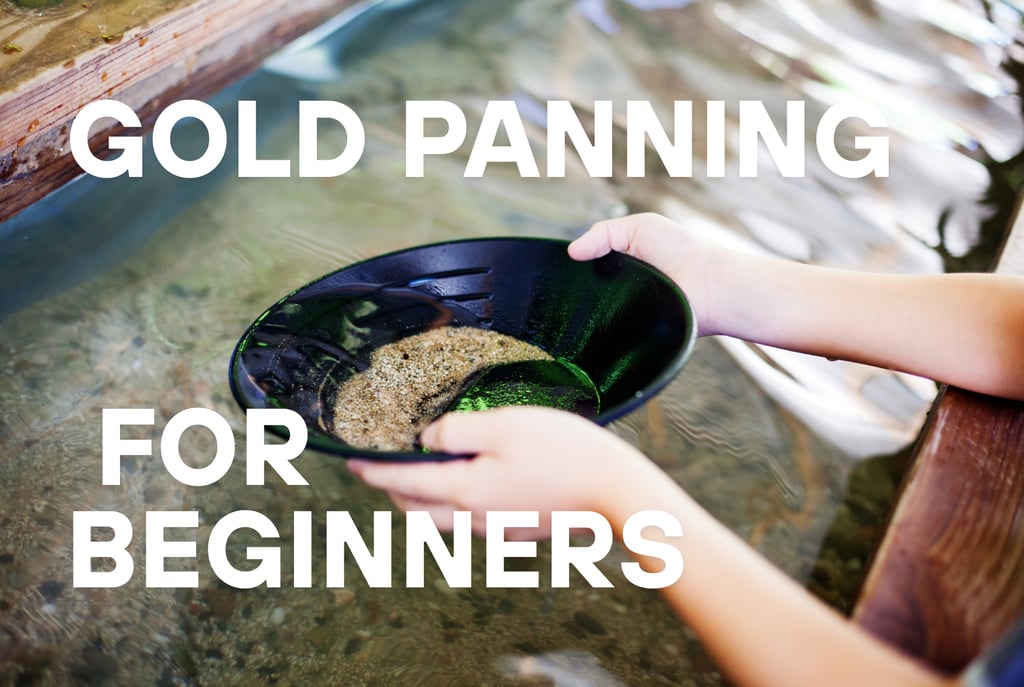
Gold panning sounds simple when you picture it. A quiet river, a pan in your hands, a big nugget that sparkles waiting at the bottom of your pan. This is what everyone imagines when they picture it.
What you don’t picture is the work.
Standing in cold water. Bending over for a long 8 hours or more. Lifting heavy gravel over and over again, only to wash most of it away and start again. It’s physical, repetitive, and it wears on you faster than you expect.
Where Gold Actually Hides
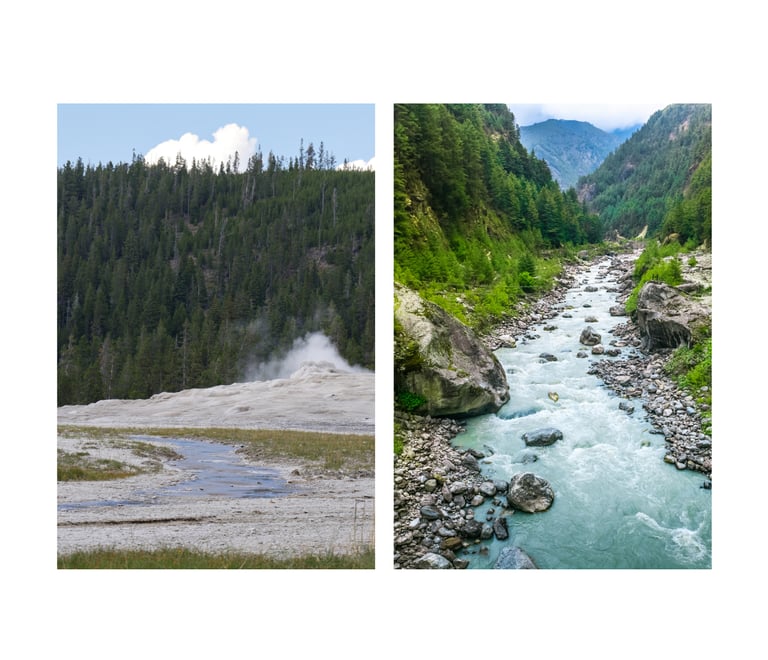
Gold doesn’t sit out in the open. It moves with the current until it drops into places where the water slows down enough to let it settle. Because it’s heavy, it ends up in the lowest, tightest spots. If you’re just scooping random material, you can spend hours doing nothing but moving rocks.
Places that are actually worth your time:
Inside bends of rivers where the current slows
Behind large rocks where water loses force
Cracks and crevices in bedrock
Areas with darker, heavier sand
Once you start looking for these patterns, it stops feeling random.
The truth is, you can find gold anywhere, not just in rivers. Usualy gold erodes from mountains and makes its way to rivers after hard rains. It is constantly traveling down. That being said, you can find gold while randomly hiking on a hill. Gold starts at the top and works its way down to the lowest point.
My First Time Gold Panning
I was like everyone else. I woke up one morning and said, "I'm going to dig for some gold and get rich"! Haha. Sounds easy, right? I wish it worked out like that.
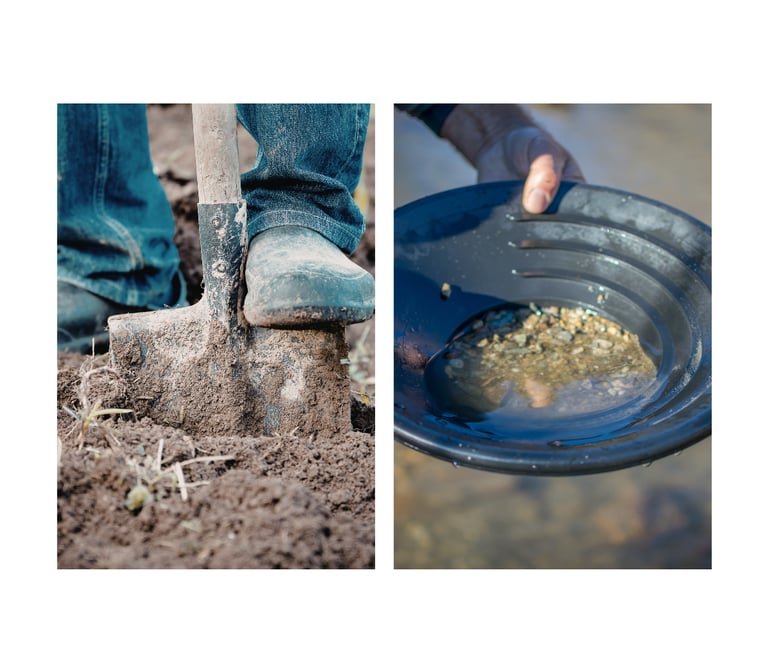
You’re digging through dirt and heavy rocks, lifting, shaking, dumping—over and over again. Your back feels it. Your hands feel it. And the cold water doesn’t make it easier.
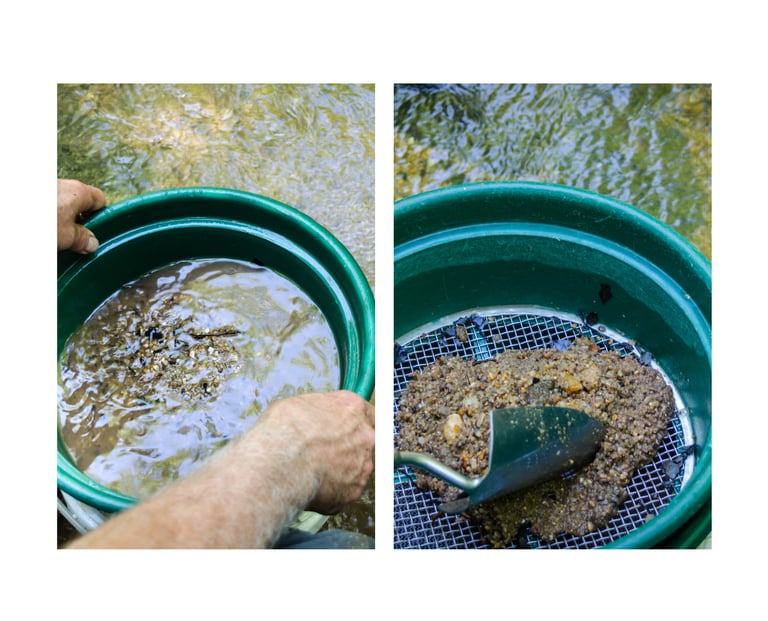
I had found a random spot on the river and started digging. Pan after pan… nothing. I questioned if I was even doing it right.
I was on a mission to find that gold and was rushing, about to give up. But once I slowed down and worked through the process more carefully, I saw it—tiny flakes sitting at the bottom of the pan and instantly got hit with the gold fever.
Not big. Not flashy. But real. And that’s what kept me going.
What to Look for When Gold Panning
If you want a real chance at finding anything, this is what matters:
Focus on slower-moving water, not fast current
Work areas where material naturally settles
Check tight gravel between rocks
Pay attention to heavier sand deposits
Gold follows patterns. If you understand that, you’re already ahead.
Beginner Mistakes That Will Cost You
Most people quit because there’s no gold. There's gold, they’re just working the wrong way.
Common mistakes:
Panning too fast and washing everything out
Working in fast-moving water
Skipping over bedrock cracks
Expecting results too quickly
This takes time. If you rush it, you’re just moving dirt.
How Much Gold Can You Really Find?
Set your expectations right. Most people are not finding nuggets. You may end up with a gram by the end of the day if you're lucky.
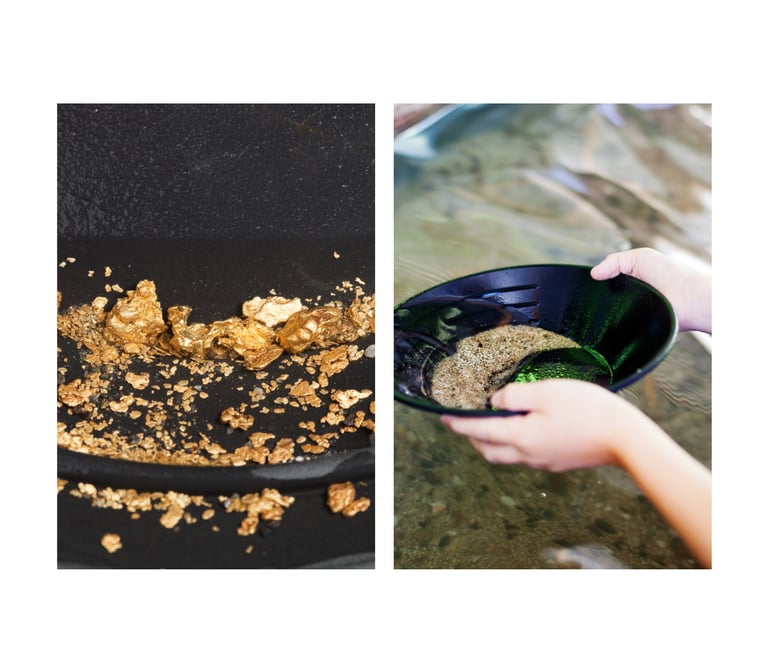
You’re looking for flakes—small pieces that collect at the bottom of your pan. Some days you’ll see a little. Some days you won’t see anything at all. But when it does, you snuff every one of those flakes up, and over time, it adds up.
If you’re thinking about making money, this probably isn’t realistic.
If you’re doing it for the experience, that’s where the value is.
What I Bring Gold Panning
You don’t need much, but the right basics help:
Simple setup. Nothing extra.
What No One Tells You
This is the part most people leave out.
Gold panning is hard work.
You’ll be bent over for long periods. You’ll be lifting wet, heavy material. You’ll repeat the same motion again and again. Some days you’ll walk away with nothing.
It can feel slow. It can feel frustrating.
And then you see that first flake.
And it changes everything just enough to keep going.
Is Gold Panning Good for Beginners or Kids?
I think this is one skill that should be taught in school. Even if the kids don't find gold, they will find lots of cool rocks and minerals. Who deosnt like geology?
You're out in nature near water, it’s simple to start, and it doesn’t require much gear.
Kids love rocks, and if they do end up with gold, then they have just learned a valuable survival skill.
Keep it simple and low pressure, so they don't lose interest.
So YES! This is a great adventure for both kids and beginners.
Is Gold Panning Worth It?
If you’re looking for something easy, no.
If you’re looking to get rich fast, no.
This is work. Hard work.
But if you’re looking for something different—something hands-on that gets you outside and focused on something real—then yes, it can be worth it.
It’s about the process more than the outcome.
Final Thoughts
Gold panning isn’t fast, and it isn’t easy. But it is fun.
It gives you something different. It slows you down, challenges you, and every once in a while, it gives you a small reward for your effort.
And sometimes, that’s enough.
Connect
Join our community
Contact
info@getoutsideandplayusa.com
© 2025. All rights reserved.