Add your promotional text...

RV & Camping Etiquette: The Unwritten Rules for Campgrounds, Boondocking & Overnight Parking
RV life is all about freedom — but when you’re camping close to others, a little common sense goes a long way. This guide to RV and camping etiquette covers the unwritten rules that keep campgrounds peaceful, public lands protected, and overnight parking options open for everyone. From managing generator noise and respecting quiet hours to staying within your campsite boundaries and cleaning up shared spaces, these simple tips help you become the kind of camper everyone appreciates. We also cover boondocking etiquette, including using existing sites, following stay limits, packing it in and packing it out, and sharing public land responsibly. Whether you’re in a full-hookup RV park, dispersed camping in a national forest, or overnighting at a rest area, these practical guidelines will help you camp confidently, respectfully, and stress-free.
OUTDOOR LIFESTYLE & TRAVEL TIPS
Get Outside and Play USA
3/23/20264 min read
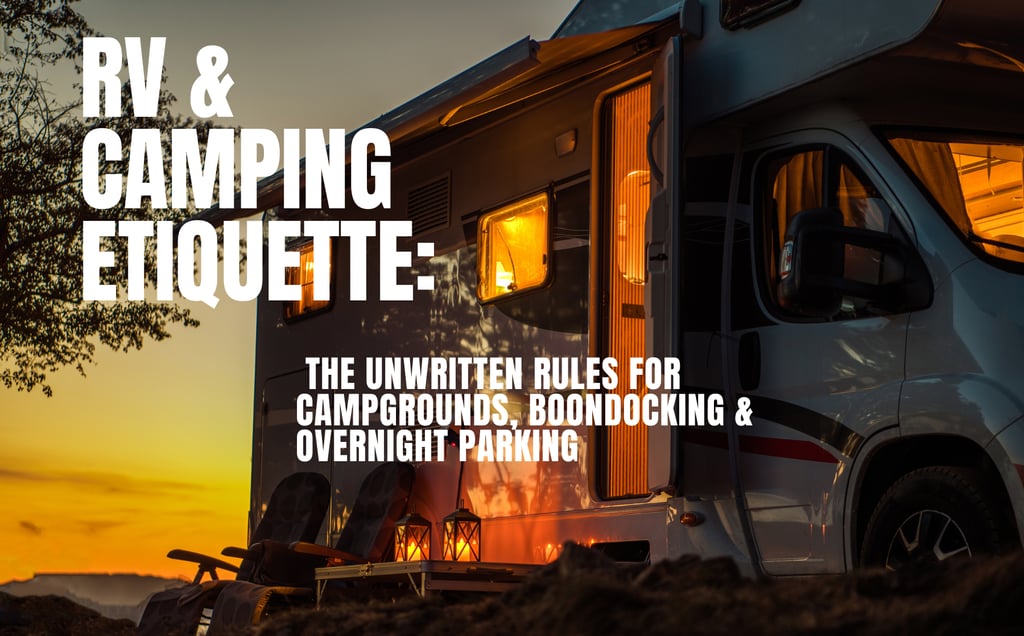
RV & Camping Etiquette: The Unwritten Rules Every Camper Should Know
There’s something incredibly freeing about RV life and camping. You pack up your home, point it toward the mountains, the desert, or the coast, and just go. No lawn to mow. No driveway to sweep. Just open skies and new adventures waiting.
But here’s the part no one talks about when you’re dreaming of life on the road…
Camping means living in close quarters. Really close.
Your “backyard” might be 10 feet from someone else’s. Your evening conversation carries across the loop. Your dog’s bark echoes farther than you think. And that late-night movie? Yeah… your neighbors might be listening too.
Whether you’re in a campground, rest area, parking lot, or out boondocking on public land, there’s a layer of unwritten etiquette that makes everything work smoothly. These aren’t meant to be strict, uptight rules. They’re simply common-sense habits that keep camping peaceful, respectful, and enjoyable for everyone.
When we follow them, we help keep public lands open, campgrounds friendly, and overnight parking options available.
So let’s walk through the simple, cheerful, common-sense guidelines that make you the kind of camper everyone hopes pulls in next door.
Campground Etiquette: How to Be a Great RV Neighbor
Stay Inside Your Site
Everything you bring with you should stay within your campsite boundary. That includes your RV, tow vehicle, slide-outs, chairs, rugs, bikes, toys, and tent stakes.
Think of your campsite as your temporary front yard. You wouldn’t set your patio furniture in your neighbor’s driveway at home. Camping isn’t any different. When everyone stays in their own space, everyone relaxes.
Don’t Walk Through Other People’s Campsites
It might save a few steps to cut through someone’s campsite on the way to the restroom, but that space belongs to them during their stay. Walking through it is like strolling through someone’s backyard. Take the extra few seconds to walk around. It shows respect.
Be Mindful of Your Noise
Most campgrounds have quiet hours, usually around 10 PM to 7 AM. But good etiquette goes beyond the posted signs. Even normal conversations carry at night. Laughter travels. Music drifts. RV walls are thin. Tent walls are even thinner. If it’s late and people are sleeping, lower the volume.
Kids playing during the day? That’s part of the magic of camping. But once bedtime hits, helping them wind down keeps everyone happy. And if you’re up early heading out for an adventure, try to keep morning noise to a minimum too.
Generator Etiquette (Yes, This Matters)
Generators can be necessary — especially when boondocking — but they can quickly disrupt the peaceful vibe. If you’re in a campground with hookups, use them. Many parks don’t allow generators anyway.
If you’re dispersed camping without hookups, run your generator during normal daytime hours and in blocks of time rather than on and off constantly. Try to park away from tent campers if possible. And starting one in the middle of the night? That’s a quick way to make enemies. If you’re completely alone out there, do what you need to do. If you’re near others, be thoughtful.
Don’t Block the Roadway
Backing into campsites takes practice. Some people are quick. Some take longer. That’s okay. Just don’t leave your rig blocking the entire loop while reorganizing storage bins or fixing something that can wait. And if someone else is taking longer than you would? Offer patience instead of pressure. We’ve all been beginners.
Clean Up After Yourself
This one is simple, (You would think). In shared bathrooms, wipe down sinks if you splash. Pick up trash. Leave the shower tidy. If you leave a mess on the toilet seat, well, clean it up! In camp kitchens and BBQ areas, scrape the grill, toss your garbage, and leave it ready for the next camper. At your own campsite, do a final sweep before leaving. No trash. No food scraps. No forgotten zip ties. Leave it better than you found it. Remember- YOU are the cleaning crew.
Give People Space
If the campground is half empty and sites aren’t assigned, don’t park right next to someone unless you have to.RV life already brings close quarters. If there’s room to spread out, spread out. Space equals peace.
Boondocking Etiquette: Respecting Public Land
Boondocking comes with fewer posted rules — but even more responsibility. Public land belongs to all of us.nThat means we protect it.
Use Existing Roads and Campsites
Don’t create new campsites by crushing vegetation or clearing brush. Look for areas that have clearly been used before — flattened ground, established fire rings, visible parking spots. Stay on designated roads and follow local public land guidelines. If you love wild places, help keep them wild.
Pack It In, Pack It Out
Whatever you bring in, take out. Trash, food waste, broken gear — all of it. Never dump tanks on public land. A true camper leaves no trace. Nothing fires me up than people who leave trash all over the place. It's disrespectful to the next person and to the land. Everything includes the pile of TP behind the tree.
Respect Stay Limits
Most public lands have a 14-day stay limit within a 28-day period. Those limits exist to prevent overuse and long-term damage. When people ignore them, access gets restricted. Following stay limits helps keep these beautiful places open for everyone.
Be Thoughtful With Pets and Noise
Off-leash pets are common in dispersed camping areas, but that only works if your dog listens and doesn’t disturb others.
Music follows the same principle. If you’re alone, enjoy it. If you’re near others, let nature be the soundtrack.
Be Social — But Read the Room
Many campers are friendly. Many also value privacy. Wave. Smile. Say hello. If someone invites you to chat, wonderful. If they keep to themselves, respect that too. Camping is personal. Let people enjoy it their way.
Rest Areas & Parking Lots: Keep It Simple
If you’re overnighting at a rest area or store parking lot, keep it low profile. Arrive late. Leave early. No awnings. No grills. No setting up camp.
These places are meant for short-term rest, not full campground setups. The more respectful we are, the longer these options remain available.
The Bottom Line
RV and camping etiquette isn’t complicated.
Be respectful.
Be aware.
Share the space.
Protect the Planet.
When we lead with common sense and neighborly kindness, the outdoors stays open, welcoming, and peaceful, and everyone has a great time. That means more quiet mornings with coffee. More sunsets by the fire. More freedom on the road.
And that’s what it’s all about.
Connect
Join our community
Contact
info@getoutsideandplayusa.com
© 2025. All rights reserved.